
Virtual staging cost vs home staging: prices and results (2026)
The short answer
- Staging a house with a staging company: $1,500 national median (NAR 2025), most jobs about $830 to $2,920, plus $500 to $600 per room per month of furniture rental, often with a 2 to 3 month minimum.
- Virtual staging by a service: about $16 to $30 per photo, 24 to 48 hours.
- AI virtual staging: about $0.50 to $2.70 per photo on monthly plans, minutes per photo. Ours: $0.58 a photo on the $29 Starter plan.
- Results: no study compares virtual and physical staging head to head. Staging of any kind helps buyers picture the home; physical staging still helps more at the showing, which is why agents rate it higher.
Want to price a real listing? Stage your listing photos with the AI tool (paid plans from $29/month).
How much does it cost to stage a house?
When a staging company does it, the median cost is $1,500, according to the National Association of Realtors' 2025 Profile of Home Staging. When the listing agent stages the home personally, the median is $500. NAR's median has swung between surveys ($400 in 2019, $1,500 in 2021, $600 in 2023, $1,500 in 2025), so treat it as a ballpark, not a quote.
HomeAdvisor's cost data puts most professional staging jobs between about $830 and $2,920, with an average near $1,850. The split that matters is occupied vs vacant: an occupied home is mostly a consultation and rearranging (HomeAdvisor averages about $800), a vacant home needs every room furnished (about $2,000 and up). Furniture rental runs about $500 to $600 per room per month (Angi), and many stagers require a 2 to 3 month minimum, so a vacant 3-bedroom that sits for 90 days can reach $6,000.
How much does virtual staging cost?
There are two kinds. A virtual staging service has a designer furnish each photo: about $16 to $30 per photo in 2026, delivered in 24 to 48 hours. Styldod publishes $23 per photo, $16 on orders of eight or more; BoxBrownie lists 30 per image in euros on its price page and advertises US$24. AI virtual staging generates the furniture in under a minute: Virtual Staging AI, for example, runs from $16 a month for 6 photos ($2.67 each) to $79 for 150 ($0.53 each).
On AI Architectures every processed photo is one generation. Starter is $29 a month for 50 generations ($0.58 a photo; $14.50 the first month), Pro $79 for 200. There is no free tier and no free trial. Because the price is per photo, it does not matter whether a photo is staged, decluttered, brightened or turned to twilight.
One listing, priced four ways
A vacant 3-bedroom: 20 listing photos, 6 empty rooms to stage (living, dining, kitchen, primary and 2 bedrooms), 60 days on market. Published prices, checked October 2026.
| Approach | How it is priced | This listing | Turnaround | Changes |
|---|---|---|---|---|
| Physical staging | Design + install fee, then $500 to $600 per room per month | About $1,500 to $2,900 (median $1,500), more if it sits longer than the minimum term | Days to book and install | Restyling = new install |
| Virtual staging service | $16 to $30 per photo | $96 to $180 for 6 rooms | 24 to 48 hours | Revisions vary by service |
| AI staging app | $0.53 to $2.67 per photo on a monthly plan | $3 to $16 for 6 rooms | Minutes | Re-run the photo |
| AI Architectures Listing Kit | $0.58 per photo (Starter) | $11.60 for all 20 photos, staging and fixes | About 10 to 15 minutes | Re-run the photo |
Results of virtual staging compared to regular staging
The honest answer first: there is no controlled study that compares virtually staged and physically staged homes on sale price or days on market. Most head-to-head numbers online come from companies that sell one of the two. What the neutral evidence does say:
- Staging helps buyers picture the home. 83% of buyers' agents say staging makes it easier for buyers to envision the property as their future home (NAR 2025). That is about the photos and the showing, and virtual staging covers the photos.
- Time on market, maybe. 49% of sellers' agents say staging reduced time on market (30% slightly, 19% greatly). This is staging in general, mostly physical.
- Price, unproven. 29% of sellers' agents report a 1% to 10% higher offer from staging, but the one controlled experiment we know of (Lane, Seiler & Seiler, 2015) found staging changed how livable people found a home, not significantly what they would pay.
- Agents rate virtual below physical. 88% of sellers' agents call listing photos more important to clients and 43% say the same of physical staging; 34% call virtual staging less important and 24% equally important (NAR 2025).
- The "73% faster" claim you see on staging sites comes from the staging industry and compares staged homes with vacant ones. It is not an NAR figure and says nothing about virtual vs physical.
Where each one wins
| Virtual staging | Physical staging | Empty, unstaged | |
|---|---|---|---|
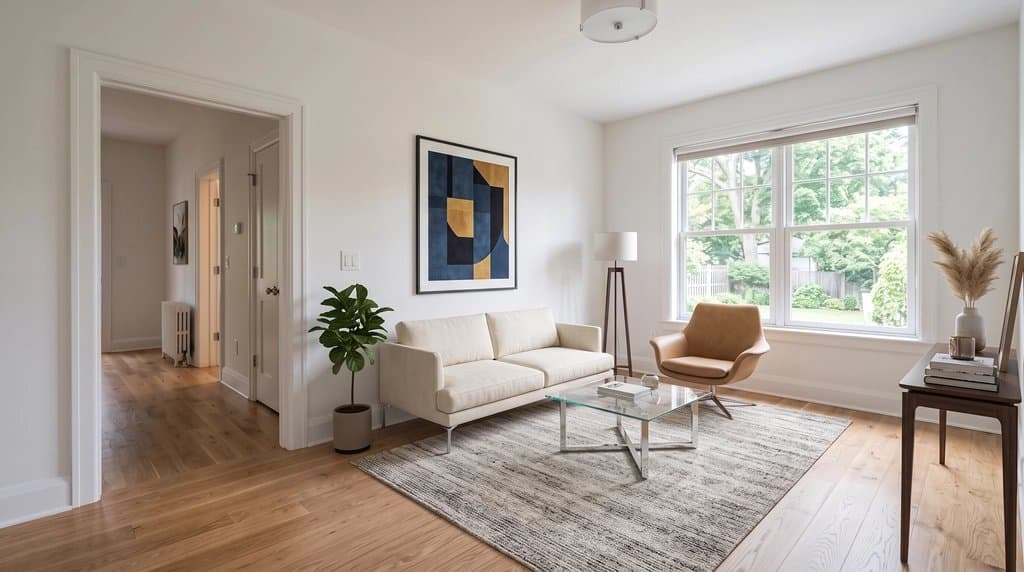
| Listing photos | Furnished, styled to the buyer you want | Furnished, real | Hard to read scale and use |
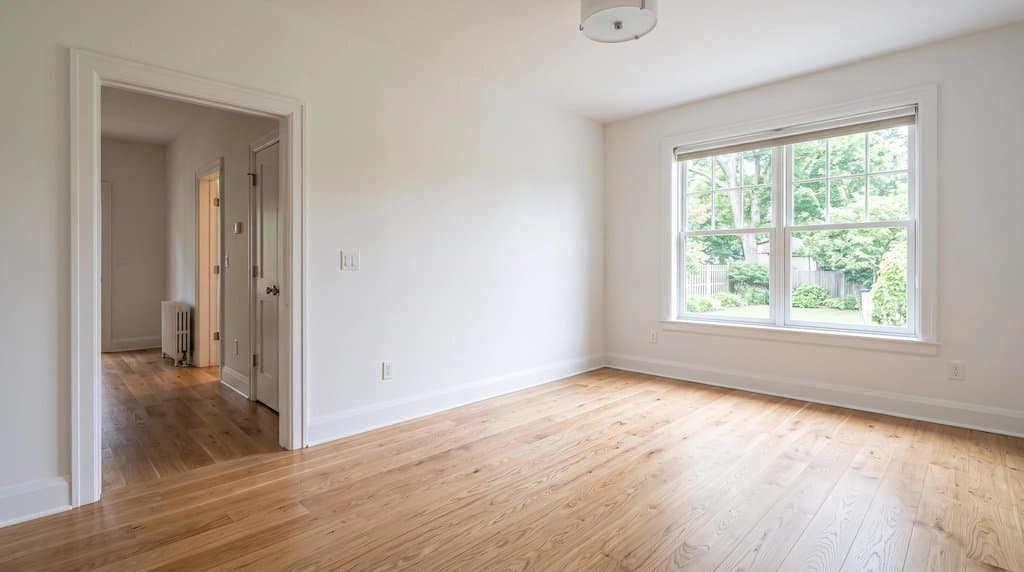
| At the showing | Rooms are empty; can feel like a gap if the photos oversell | Buyers walk through the furnished home | Empty |
| Cost for one listing | About $10 to $180 | About $1,500 to $3,000+ | $0 |
| Disclosure | Required by most MLSs; AB 723 in California | None | None |
| Change the style | Re-run the photo | New install | n/a |
Physical staging is worth it for higher-priced homes where buyers expect a furnished walkthrough and where a 1% better offer is many times the staging bill.
Virtual staging is enough for most vacant listings, rentals, new construction and estate sales, where the job is to get buyers to book a showing. Show the empty original next to each staged photo and the showing will not feel like a bait and switch.
Who pays for staging, and which rooms
In NAR's 2025 survey, 23% of sellers' agents personally offer to stage the home, 17% say the seller pays before listing, and 26% say it depends. 21% of sellers' agents stage every listing, and 51% don't stage but tell sellers to declutter and fix faults.
The rooms agents stage most are the living room (91%), primary bedroom (83%), dining room (69%) and kitchen (68%). With virtual staging the per-room cost is low enough to stage every empty room, but those four carry the listing.
Disclosure rules for virtual staging
Most MLSs require virtually staged photos to be marked as such. In California, AB 723 (Business and Professions Code 10140.8) has required since January 1, 2026 that an advertised digitally altered photo is disclosed and that the original, unaltered photo is accessible, usually by a link or QR code. In the EU, Article 50 of the AI Act requires AI-generated or AI-manipulated images to be marked.
- Do: label staged photos, keep the empty original next to each one, only add movable items.
- Don't: add or remove windows, doors or walls, hide damage, change room size, or invent outdoor features.
For the agent workflow with labeled copies, originals and a ready MLS remark in one download, see virtual staging for realtors.
Frequently asked questions
How much does it cost to stage a house?
Using a staging company, the national median is $1,500 (NAR 2025 Profile of Home Staging; $500 when the listing agent stages it personally). HomeAdvisor puts most projects between about $830 and $2,920, with vacant homes costing more than occupied ones because every room needs rented furniture. Rental runs about $500 to $600 per room per month, and many stagers ask for a 2 to 3 month minimum.
How much does virtual staging cost?
A human virtual staging service charges roughly $16 to $30 per photo in 2026 (Styldod $23, or $16 on orders of 8 or more; BoxBrownie lists 30 per image in EUR and advertises US$24). AI virtual staging apps cost about $0.50 to $2.70 per photo on monthly plans. On AI Architectures it is one generation per photo: $0.58 on the $29 Starter plan, no free trial.
What are the results of virtual staging compared to regular staging?
No controlled study compares the two directly. Agent surveys and one experiment say staging of any kind helps buyers picture the home (83% of buyers' agents, NAR 2025) and may shorten time on market (49% of sellers' agents), while price effects are small or unproven (Lane, Seiler & Seiler 2015 found no significant change in what people would pay). Agents rate virtual staging below physical staging: 34% of sellers' agents call it less important to clients, 24% equally important. Virtual staging matches physical staging in the listing photos at a fraction of the cost; physical staging still wins at the showing, where virtually staged rooms are empty.
Do staged homes really sell 73% faster?
That figure comes from the staging industry, not from NAR, and compares staged homes with vacant ones, not virtual with physical staging. NAR's own 2025 survey says 49% of sellers' agents saw staging reduce time on market, 30% slightly and 19% greatly.
Do realtors pay for staging?
Sometimes. In the NAR 2025 survey, 23% of sellers' agents personally offer to stage the home, 17% say the seller pays before listing, and 26% say it depends on the situation. Virtual staging is cheap enough that many agents simply include it in their listing service.
Which rooms should I stage?
The ones agents stage most often are the living room (91%), the primary bedroom (83%), the dining room (69%) and the kitchen (68%) (NAR 2025). Buyers rank the living room, primary bedroom and kitchen as most important.
Do I have to disclose virtual staging?
In most MLSs yes, and in California AB 723 requires since January 1, 2026 that a digitally altered listing photo is disclosed and that the unaltered original is accessible. Check your MLS rules; this is not legal advice.
Sources
- National Association of Realtors, 2025 Profile of Home Staging (press release, May 6, 2025)
- HomeAdvisor / Angi home staging cost data (as cited by Opendoor and Angi, 2025)
- Lane, Seiler & Seiler (2015), "The Impact of Staging Conditions on Residential Real Estate Demand", Journal of Housing Research
- BoxBrownie price list (virtual staging 30 per image in EUR on the pricing page; the US home page advertises US$24)
- Virtual Staging AI price page (Basic $16 for 6 photos to Enterprise $79 for 150 photos a month)
- California AB 723 (Business and Professions Code 10140.8), in force January 1, 2026
- Styldod per-photo prices as published in 2026 third-party comparisons (Bella Virtual, aiandrealtors.com); check styldod.com before ordering.
Prices change often. Checked October 8, 2026. Not legal advice.
Stage a whole listing for the price of one service photo
Upload the listing, pick one style, get staged rooms, glare and twilight fixes, AI-labeled copies, originals and the MLS disclosure in one ZIP. $29/month for 50 photos; no free trial.