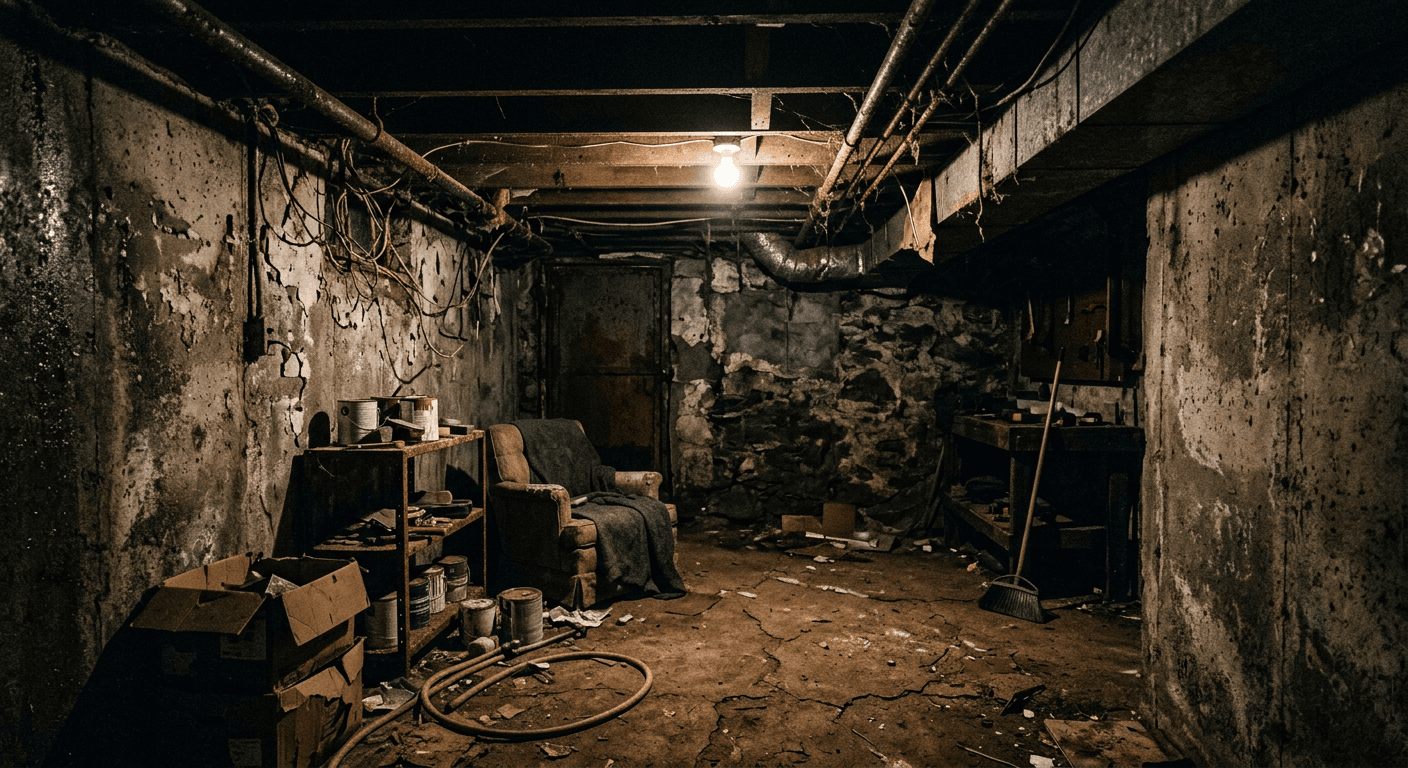
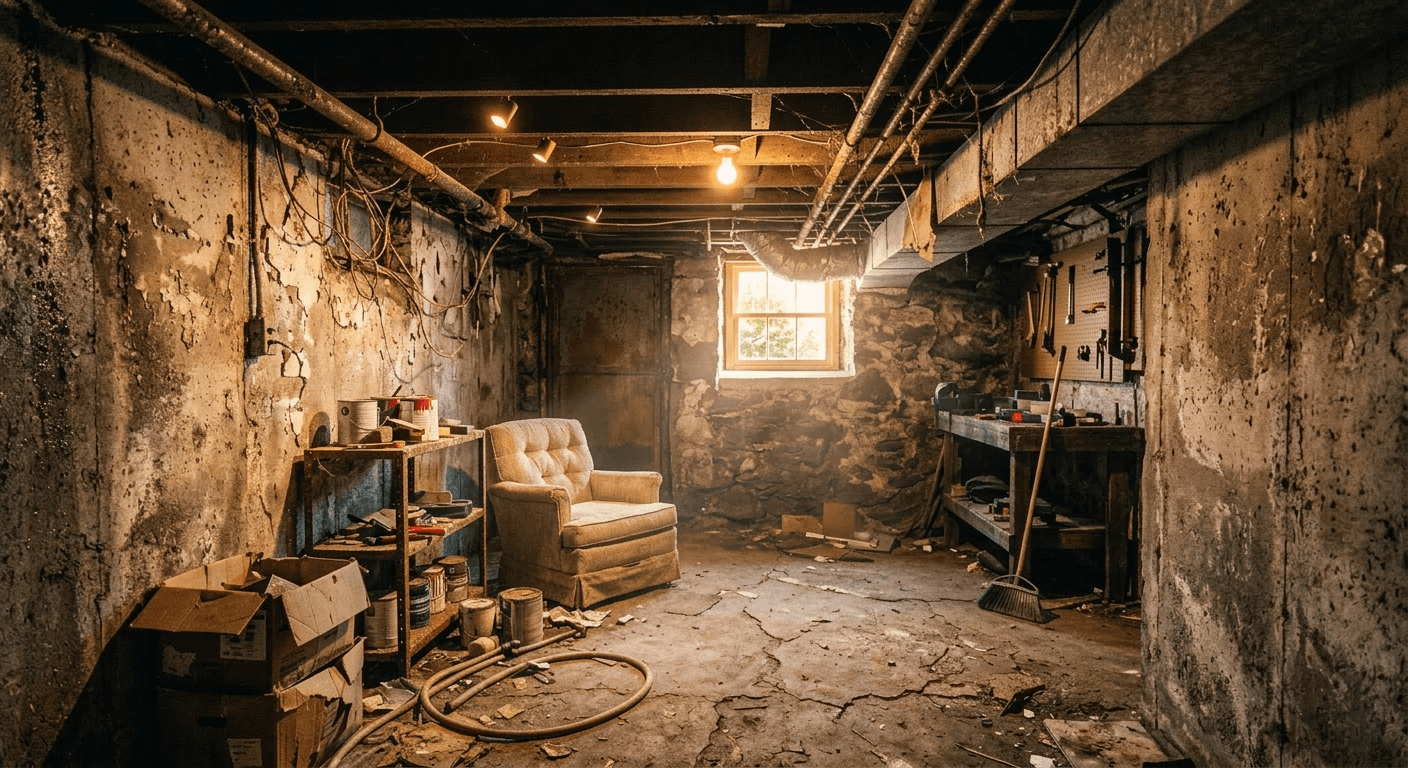
The Subterranean Dilemma: Why Basements Feel Like Dungeons
Architecturally speaking, basements inherit a unique set of spatial challenges. Buried partially or entirely underground, they are starved of natural sunlight. Combine this with lower ceiling heights, exposed HVAC ductwork, and structural support columns, and it becomes remarkably easy for the space to devolve into a dark, uninviting storage cavern. However, the true culprit behind the "dungeon effect" is rarely the physical dimensions of the room. It is almost always a failure of lighting design.
Deconstructing Light: The Three Layers of Architectural Illumination
To make a dark basement look bright and inviting, a single high-wattage bulb in the center of the room is catastrophic. It creates harsh glares, deep shadows in corners, and highlights every imperfection in the space. Professional architectural lighting relies on a triad of layered illumination:
- 1. Ambient Lighting (The Foundation)This is your foundational layer, meant to mimic natural daylight. In basements, this is best achieved through recessed LED downlights (can lights) evenly spaced to wash the floor plan. Modern AI architectural tools can calculate the exact grid spacing required based on ceiling height to ensure zero dark spots.
- 2. Task Lighting (The Function)Task lighting brings focus to functional areas. Whether it is pendant lights over a basement bar, under-cabinet lighting in a subterranean kitchenette, or a sleek desk lamp in a home office nook, task lighting pulls the eye away from the ceiling and grounds the inhabitant in the space.
- 3. Accent Lighting (The Atmosphere)This is where the magic happens. Accent lighting—such as wall sconces, LED strip lighting behind floating shelves, or directional artwork lights—washes walls with warm hues. It artificially pushes walls outward, making the room feel wider, taller, and dramatically more sophisticated.
Beyond the Bulb: Maximizing Light with Texture and Color
At AI-Architectures.com, we understand that light does not exist in a vacuum. Light requires surfaces to interact with. The difference between a gloomy basement and a dream space heavily relies on a concept called Light Reflectance Value (LRV).
LRV measures the percentage of light a paint color reflects. Pure black has an LRV of 0, absorbing all light, while pure white has an LRV of 100. For basement remodels, selecting colors with an LRV of 60 or higher is non-negotiable. But it extends beyond paint:
Flooring Reflectance
Dark carpets absorb ambient light. Opt for luxury vinyl plank (LVP) in light oak or blonde ash, or use polished concrete with a high-gloss sealant. These materials bounce overhead lighting back up toward the ceiling, visually expanding the volume of the room.
Strategic Mirroring
Architects frequently use large, strategically placed mirrors or glossy glass tiles in subterranean spaces. By placing a mirror opposite any small egress window, you immediately double the impact of whatever natural light is available.
The Psychology of Color Temperature (Kelvin)
Choosing the right lightbulb is just as critical as where you place it. Light temperature is measured in Kelvins (K). Basements are highly sensitive to incorrect Kelvin values.
| Temperature | Appearance | Basement Application |
|---|---|---|
| 2700K - 3000K | Warm, yellowish glow | Perfect for accent lighting, sconces, and dedicated theater rooms to create a cozy, intimate den feeling. |
| 3500K - 4000K | Neutral, crisp white | The Gold Standard for Basements. Ideal for general ambient recessed lighting to mimic natural daylight without feeling clinical. |
| 5000K+ | Cool, bluish white | Avoid in living spaces. It induces a sterile, hospital-like, or literal "dungeon lab" feeling. Reserve for utility rooms only. |
Why Use AI Architecture for Basement Lighting Design?
Traditional architectural planning requires costly 3D modeling and light-mapping software to predict how a space will feel. With the advent of AI-driven design on platforms like ai-architectures.com, homeowners and real estate professionals can rapidly iterate through hundreds of lighting permutations in seconds.
Our AI engines understand the complex math behind light dispersion. By prompting the AI with specific parameters—such as ceiling height, window placement, and desired mood—the neural network generates photorealistic concepts that prove how a few calculated changes can elevate your property's value and livability.
A finished basement with exceptional lighting design doesn't just create a dream space for your family; it yields one of the highest Returns on Investment (ROI) in real estate, turning unused subterranean square footage into premium, highly desirable living space.