Transform Outdated Carpets into Premium Hardwood with AI
Empower buyers to see the true potential of a property. Using the advanced spatial computing capabilities of ai-architectures.com, you can instantly visualize any room with stunning hardwood floors, eliminating the imagination gap caused by old, worn-out carpeting.
The "Imagination Gap" in Real Estate Sales
One of the most significant barriers to closing a real estate transaction at top market value is a buyer's inability to look past cosmetic flaws. Outdated, stained, or simply unfashionable wall-to-wall carpeting can instantly date a property, making rooms feel smaller, darker, and less hygienic. While real estate agents and architects understand that ripping up carpet to reveal or install hardwood is a relatively straightforward weekend renovation, the average homebuyer struggles to visualize the final result.
This cognitive hurdle—the imagination gap—often results in lower offers, prolonged days on the market, or lost sales. Buyers mentally over-calculate the cost and effort of replacing the flooring, letting a high-potential property slip through their fingers. Traditional staging or physical renovations are costly, time-consuming, and carry inherent financial risks if the chosen style doesn't resonate with the local buyer demographic.
The Solution: Photorealistic AI Floor Replacement
At ai-architectures.com, we have engineered a state-of-the-art virtual renovation engine tailored specifically for architectural visualization. By simply uploading a photo of a carpeted room, our AI analyzes the spatial geometry, natural lighting, shadow dispersion, and existing furniture placements. Within seconds, it digitally strips away the outdated carpet and seamlessly integrates high-end hardwood flooring—be it wide-plank European oak, rich Brazilian walnut, or modern distressed hickory.
Visualize the Upgrade Potential
Notice how the AI flawlessly maintains the original room's lighting, respects the baseboards, and generates accurate reflections and shadows on the new hardwood surface.
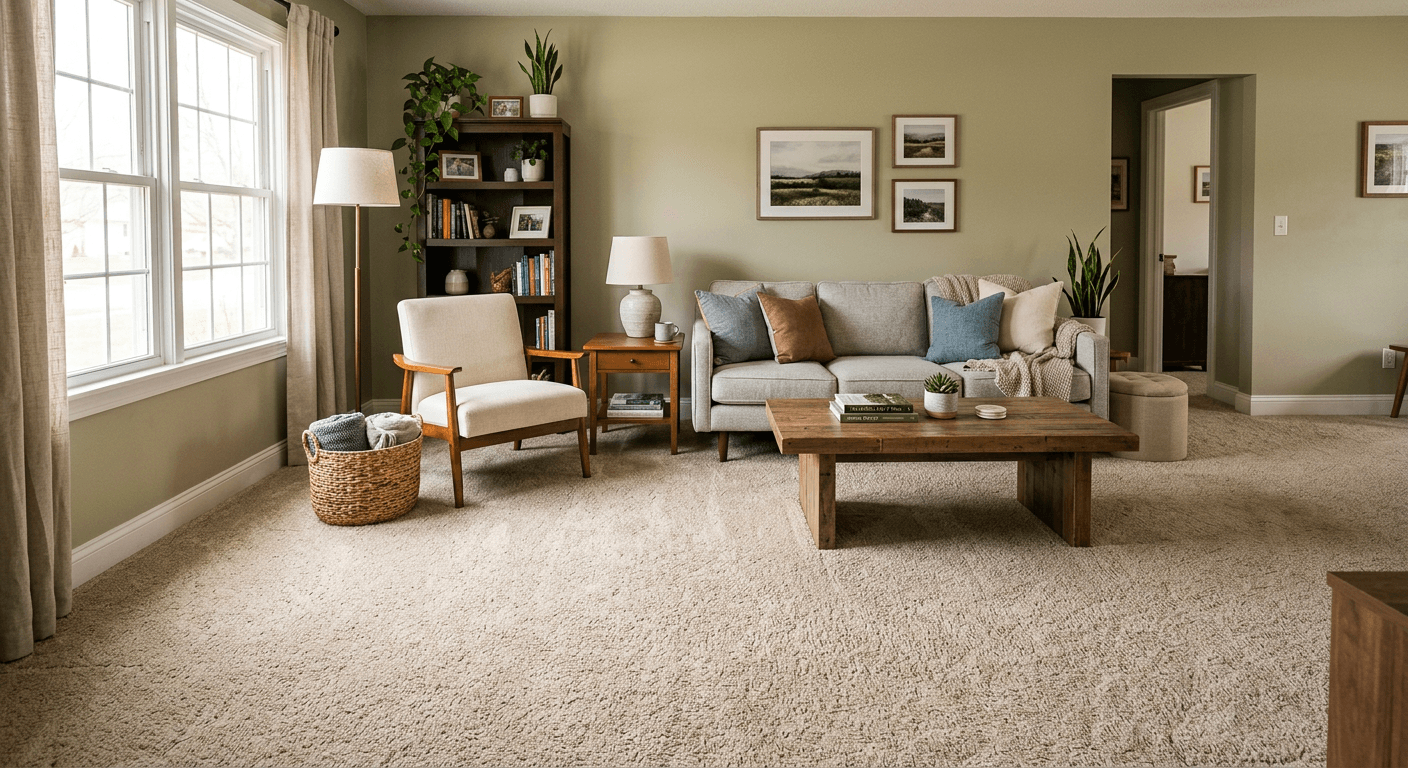
The original space is anchored down by visually heavy, textured carpeting that absorbs light and makes the room feel cramped and dated. Buyers often perceive this as an immediate $10,000+ problem they have to solve upon moving in.
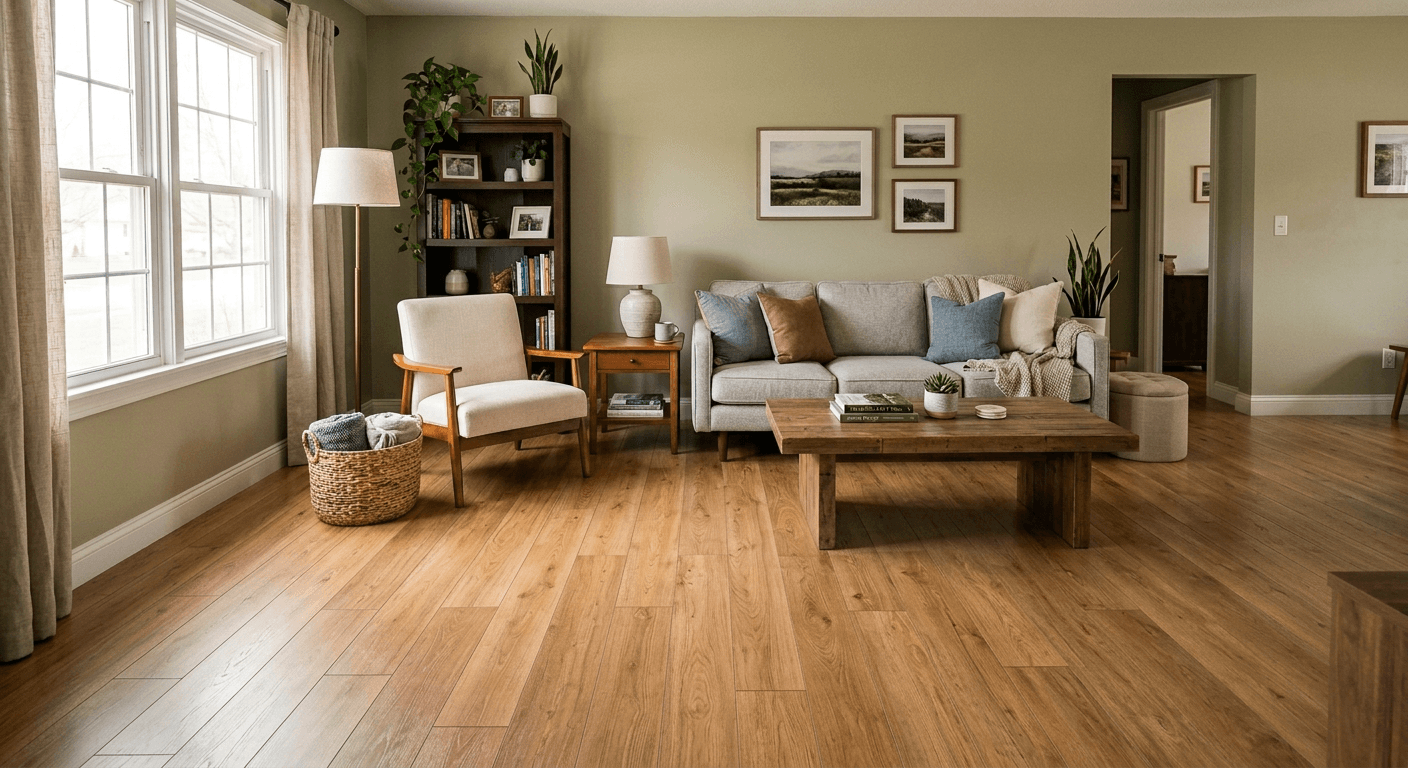
Transformed instantly. The AI has intelligently laid down continuous hardwood planks, mapping them perfectly to the room's perspective. The space instantly feels wider, brighter, cleaner, and significantly more valuable.
Try It Yourself: The Virtual Flooring Engine
Experience the power of ai-architectures.com. Describe the exact type of hardwood finish you want to visualize in your space, and let our architectural AI handle the complex rendering in real-time.
The ROI of Virtual Hardwood Visualization
According to the National Association of Realtors (NAR), installing hardwood floors yields one of the highest returns on investment for interior projects, often recovering 118% of the cost at resale. However, sellers are frequently reluctant to undertake the disruption and upfront cost of replacing floors right before moving.
Virtual flooring replacement serves as the ultimate compromise. By presenting high-quality, AI-generated images alongside the actual listing photos, real estate professionals can market the "potential" of the home. This visual proof allows buyers to emotionally connect with the modernized version of the house, justifying higher asking prices without the seller spending a dime on actual materials or labor.
Why Top Architects & Agents Use AI
- Zero Renovation Downtime: Showcase the upgraded home immediately on MLS.
- A/B Testing Styles: Show the same room in warm cherry, cool ash, or classic oak to appeal to different buyer tastes.
- Cost Efficiency: Pennies on the dollar compared to traditional 3D rendering studios.
How AI Understands Architectural Nuance
Replacing flooring in an image is historically one of the most complex tasks in photo manipulation. A standard Photoshop edit often looks flat, resembling a textured wallpaper slapped onto the ground. This happens because 2D editing tools do not inherently understand 3D space.
ai-architectures.com operates differently. Our proprietary AI models utilize advanced depth-estimation and semantic segmentation. When the AI analyzes your image, it instantly categorizes every pixel: identifying walls, differentiating a coffee table leg from the carpet beneath it, and mapping the exact location of light sources.
When it generates the new hardwood floor, it calculates vanishing points so the planks recede naturally into the distance. It intelligently renders ambient occlusion—the soft shadows where furniture meets the floor—and adds specular highlights matching the room's actual windows or overhead fixtures. The result is a virtually staged upgrade that is practically indistinguishable from an actual photograph, cementing buyer trust and accelerating the decision-making process.