Decoding the Mid-Century Modern Aesthetic for Coffee Shops
The Mid-Century Modern (MCM) movement, flourishing from the mid-1940s to the late 1960s, represents a pinnacle of functional, accessible, and forward-looking design. When applied to modern commercial cafe remodeling, this style yields environments that feel simultaneously nostalgic and exceptionally contemporary. At ai-architectures.com, our algorithms are trained to understand not just the surface-level aesthetics of MCM, but the profound architectural philosophy behind it.
1. Organic Warmth Meets Geometric Precision
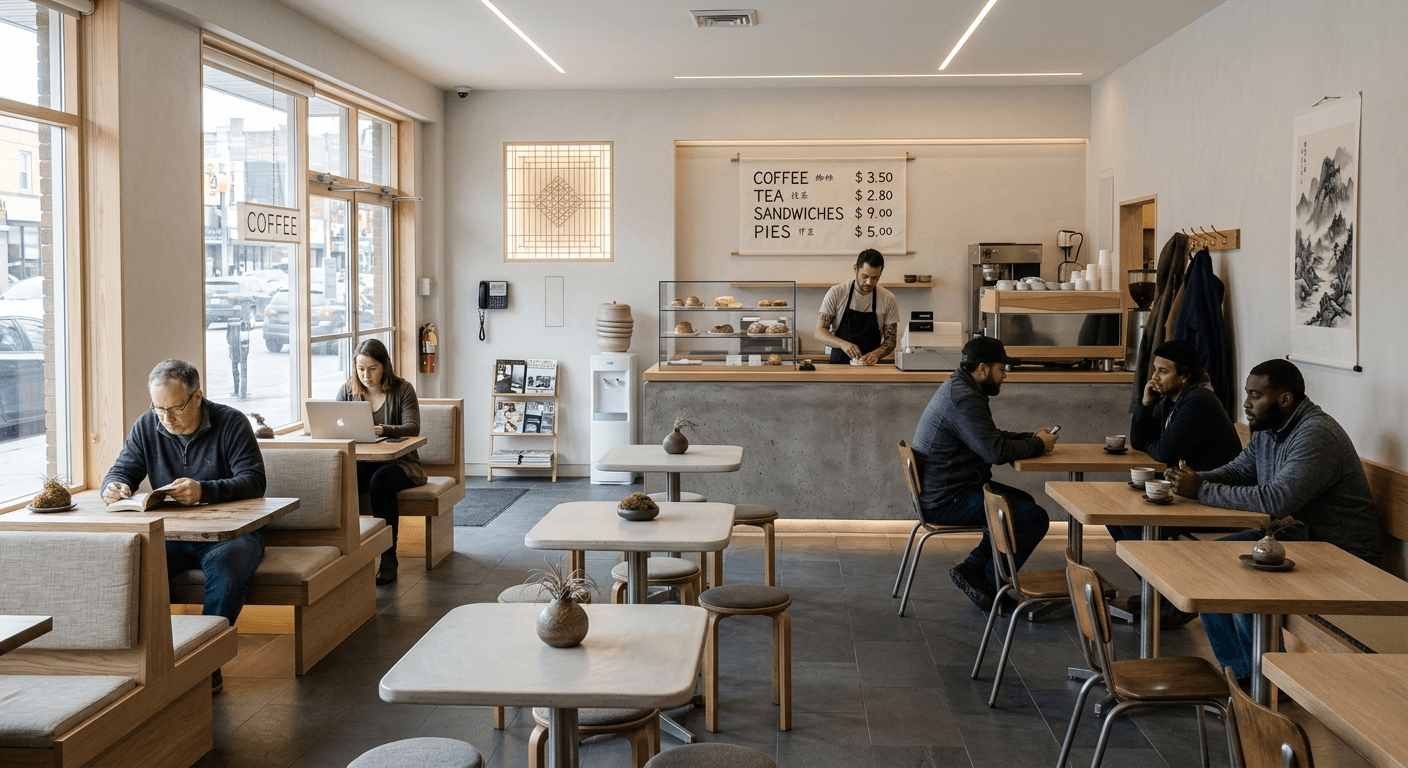
A successful mid-century cafe relies on the juxtaposition of sleek, man-made lines and the organic warmth of natural materials. Integrating expansive panels of rich teak, walnut, or rosewood provides acoustic dampening while enveloping patrons in warmth. Our AI interior generator specifically calculates material intersections, allowing you to visualize how a ribbed walnut service counter contrasts against a polished terrazzo floor.
2. The Retro-Infused Color Palette
Color theory in mid-century design is unmistakable. It leans heavily on earthy, muted tones punctuated by highly saturated accent colors. When planning your cafe remodel, consider base tones of warm off-white, olive green, or taupe, layered with vibrant pops of mustard yellow, burnt orange, or vibrant teal. AI-Architectures.com allows you to rapidly iterate through hundreds of color permutations, ensuring your brand identity aligns perfectly with the historical accuracy of the style.
3. Iconic Lighting as Sculptural Art
In MCM cafe interiors, lighting is never merely functional—it acts as a suspended architectural sculpture. Whether it's a dramatic brass Sputnik chandelier commanding the center of the room, or a series of minimalist globe pendants hung low over intimately scaled booths, lighting defines the spatial hierarchy. AI-generated architectural renders allow you to simulate lighting falloff, shadow casting, and the color temperature of your selected fixtures before purchasing expensive inventory.