The Anatomy of a Perfect AI-Staged Dining Room
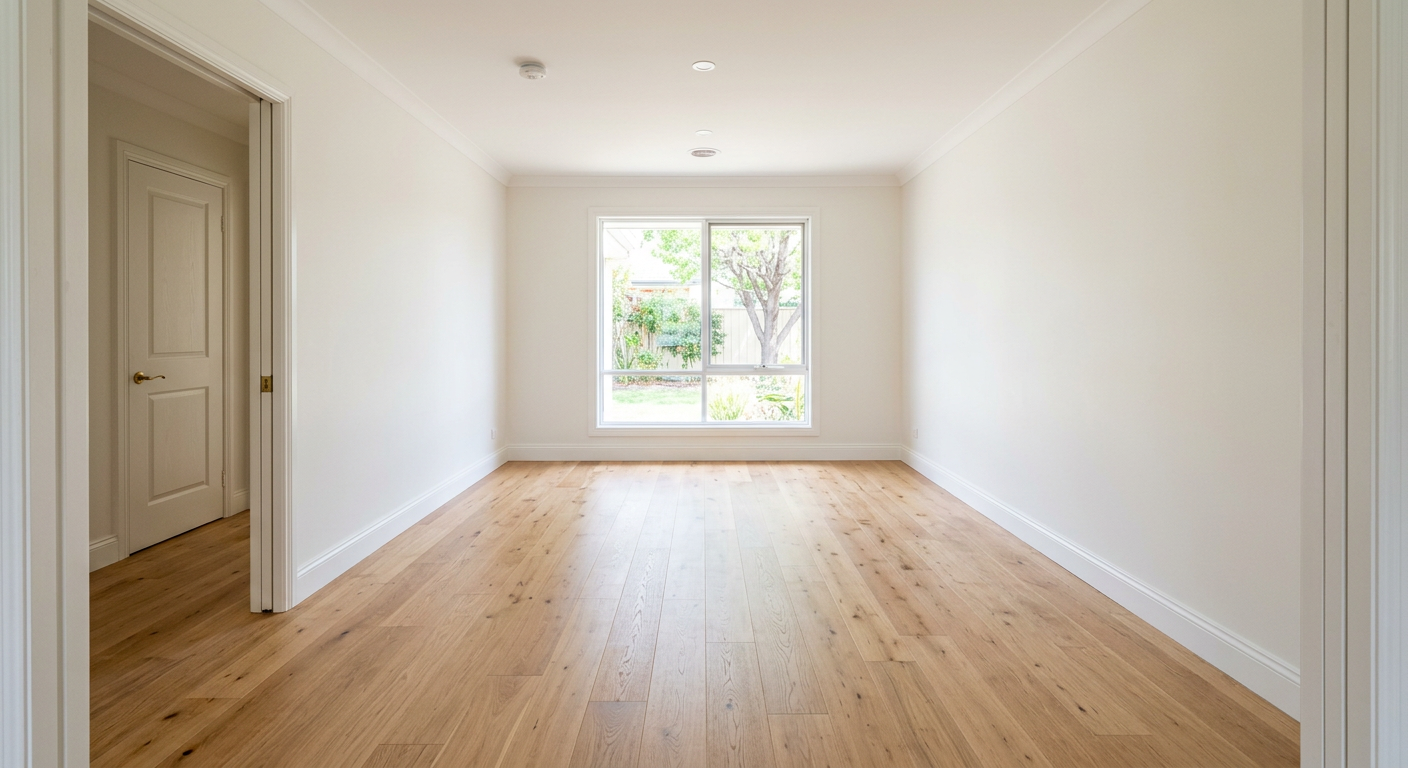
Creating the perfect entertaining space is an art form, and our AI model has been trained on tens of thousands of award-winning architectural and interior design photographs. When you transform a vacant dining room using AI-Architectures.com, the system meticulously considers several foundational design pillars.
Spatial Flow and Proportions
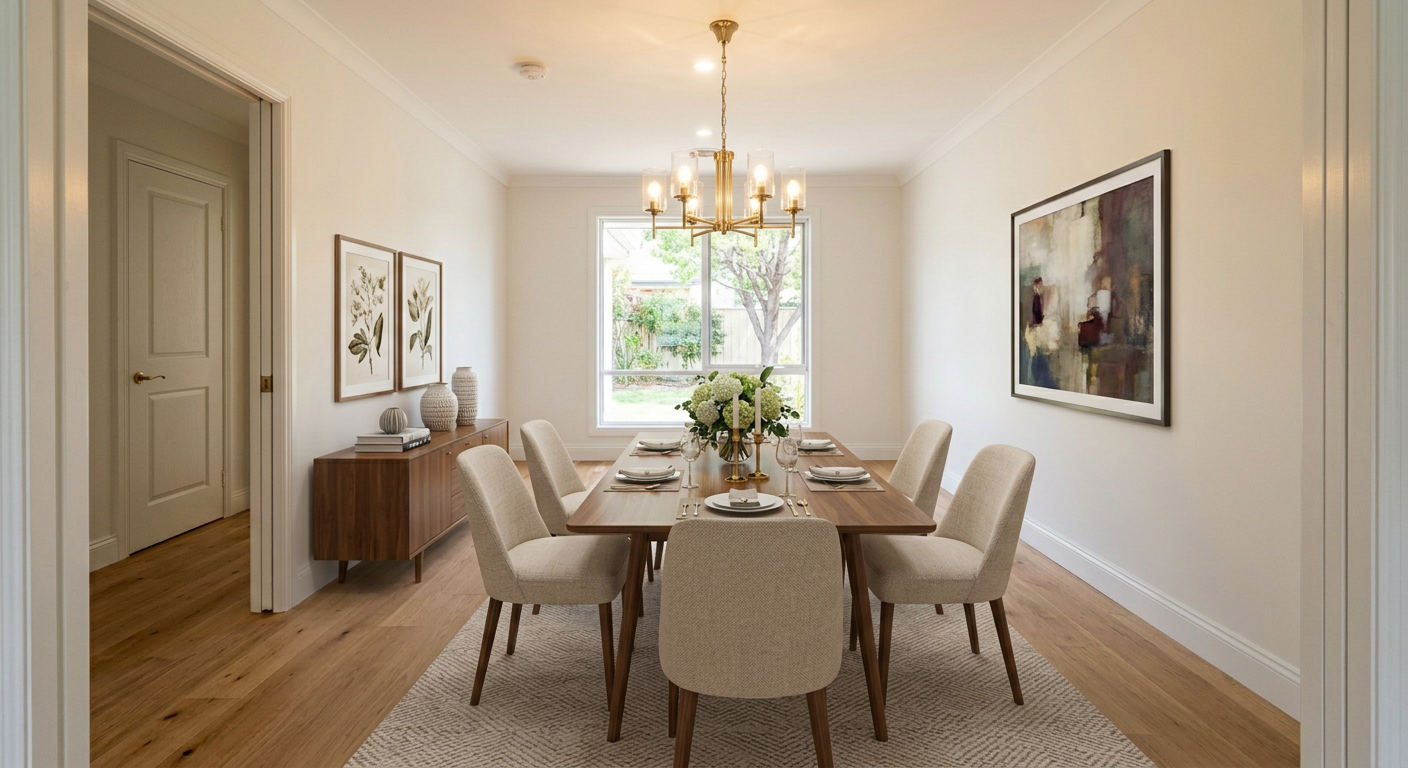
One of the critical failures of early virtual staging software was the "floating furniture" effect. Items were awkwardly stamped onto an image, ignoring the natural flow of the room. Our advanced neural networks analyze the vanishing points, ensuring that the dining table allows for comfortable clearance (typically 36 to 42 inches) from the walls. The scale of the chandelier is automatically calculated to complement the ceiling height and table length, ensuring architectural harmony.
Materiality and Texture
Luxury is tactile. Even in a 2D photograph, the human eye expects to see the subtle grain of a natural oak table, the soft light diffusion of velvet dining chairs, or the crisp reflection of a brass light fixture. AI-Architectures renders micro-textures that ground the generated furniture in reality, preventing the spaces from looking like sterile video game environments.
Contextual Decor
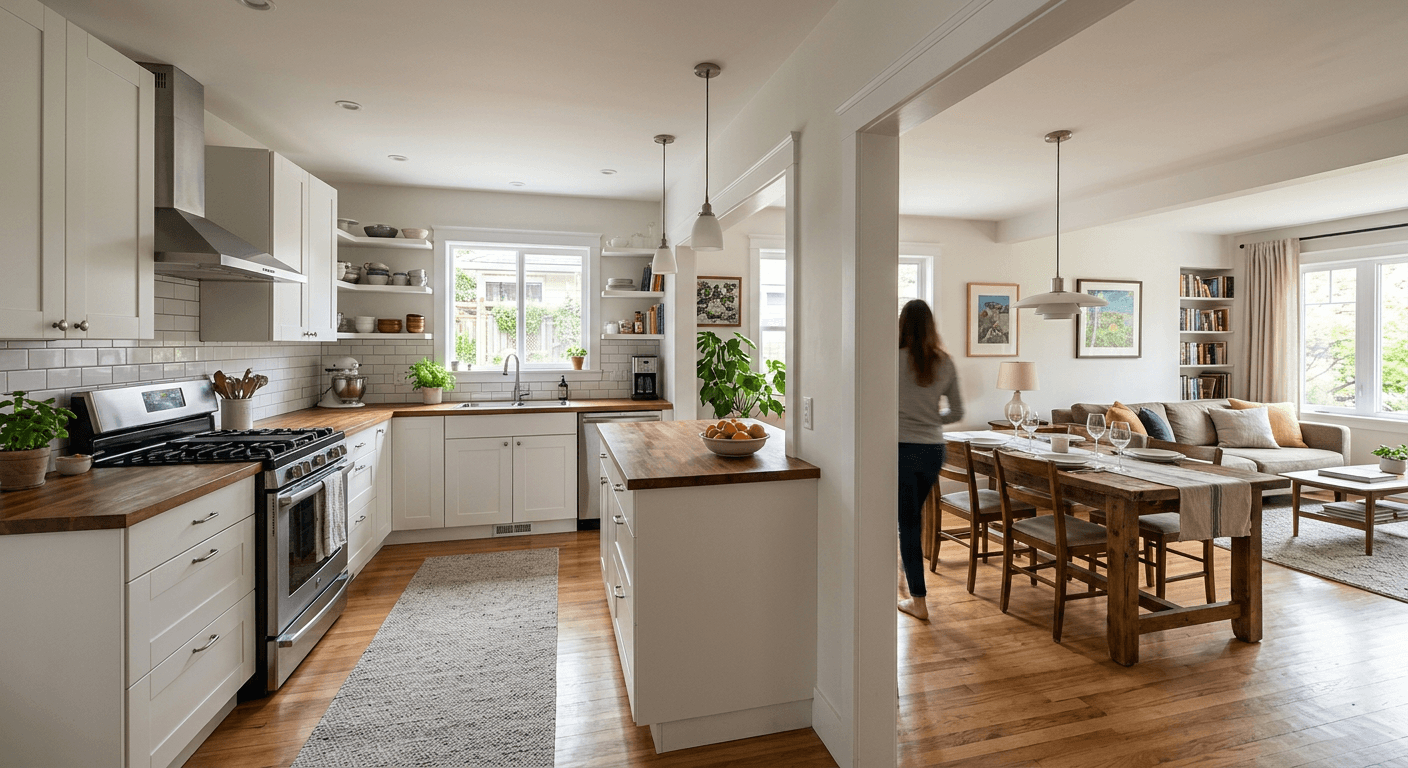
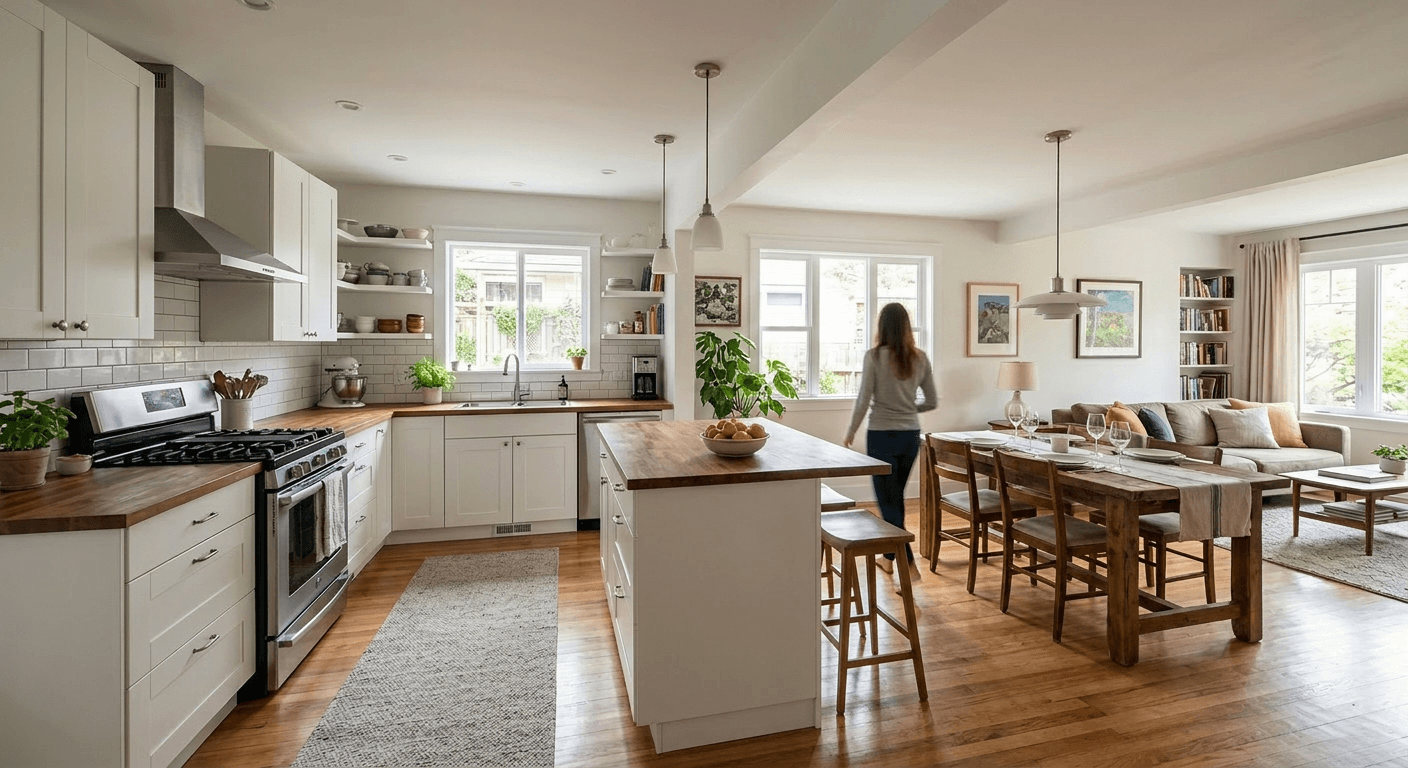
An elegant entertaining space requires more than just a table and chairs. It’s the carefully placed centerpiece, the ambient buffet table, the subtle artwork on the walls, and the strategic use of area rugs to define the dining zone within an open-concept floor plan. By inputting specific prompts, users can orchestrate these elements to tell a cohesive, aspirational story.