See Your Unfinished Basement Transformed Into Livable Space
Stop guessing what your raw, concrete basement could look like. With advanced spatial AI, you can instantly visualize beautifully finished drywall, premium flooring, strategic lighting, and scaled furnishings perfectly tailored to your home's footprint.
The Ultimate Challenge of Unfinished Spaces
Walking down the stairs into an unfinished basement often feels like stepping into a daunting construction site. Exposed wooden studs, concrete foundation walls, hanging wires, and sprawling HVAC ductwork make it incredibly difficult to imagine a cozy, functional room. At AI-Architectures.com, we understand that the gap between a raw sub-level and a vibrant living space is primarily a failure of visualization.
Homeowners and contractors alike struggle to align on a vision. Will a drop ceiling feel too claustrophobic? Will luxury vinyl plank (LVP) flooring warm up the cold concrete? How do we combat the lack of natural light? Our AI-driven architectural rendering engine solves these problems in seconds, providing photorealistic before-and-after transformations that bridge the gap between imagination and reality.
The AI Transformation Proof
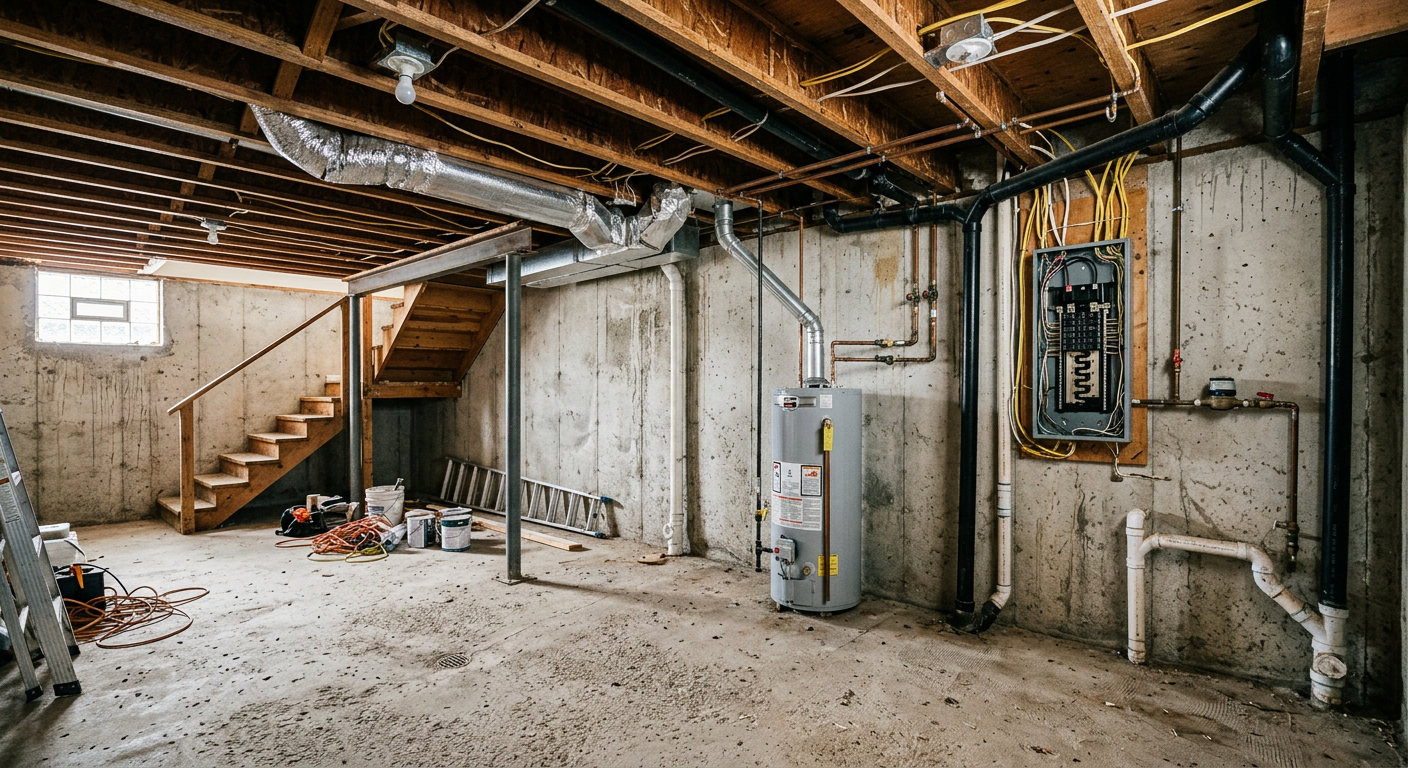
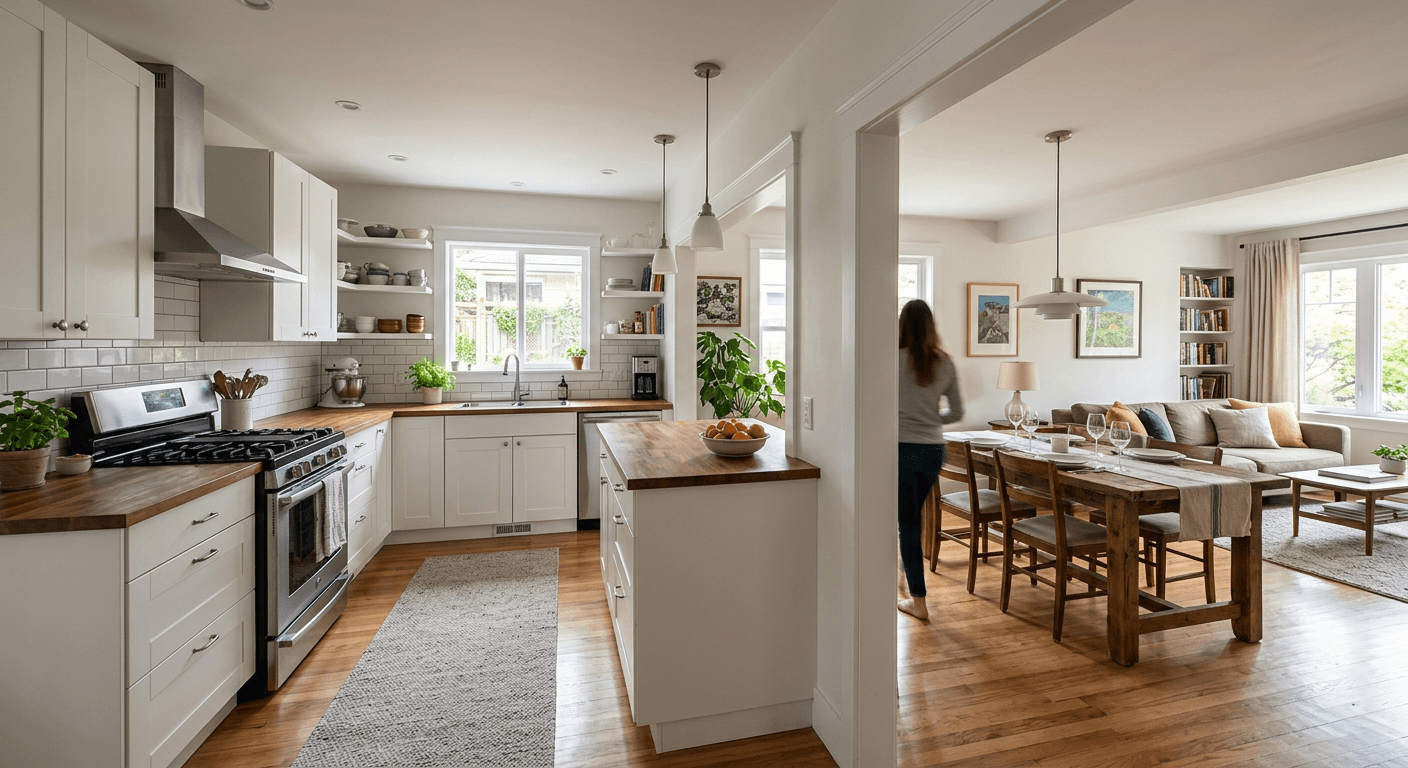
The typical starting point: cold concrete, exposed joists, and a lack of visual direction. The raw structure holds infinite potential but offers zero comfort.

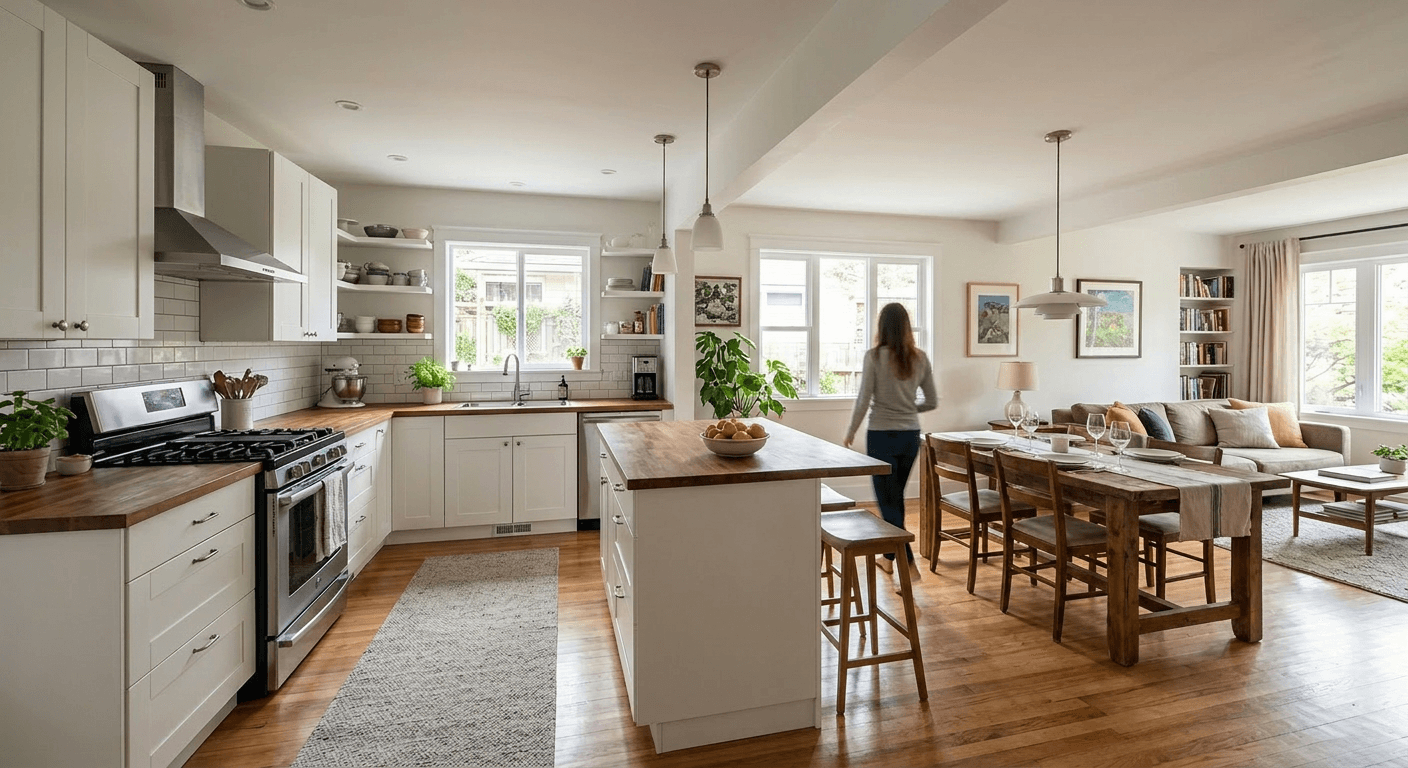
The AI-rendered result: perfectly modeled drywall, warm lighting mitigating the lack of windows, elegant flooring, and perfectly scaled contemporary furnishings.
Visualizing Drywall and Spatial Flow
Moving from framing to finished walls completely alters the perception of space. Exposed studs make a room feel chaotic and visually noisy. By applying AI-generated drywall rendering, we instantly establish the true boundaries of the room.
Our models account for necessary architectural obstacles typical in basements. Whether it is boxing in HVAC ductwork with elegant soffits, turning structural lally columns into beautifully wrapped architectural features, or planning the optimal layout for egress windows, the AI visualizes a seamless, polished shell. You can test different paint palettes instantly—from bright, space-enhancing whites to moody, cinematic dark tones for a home theater setup.
Grounding the Space: Flooring Options
Basement flooring presents unique challenges. Because the foundation sits below grade, moisture mitigation is critical, rendering traditional solid hardwood impractical. However, that doesn't mean sacrificing aesthetics.
With AI-Architectures, you can experiment with hundreds of flooring options digitally before committing. Visualize high-end Luxury Vinyl Plank (LVP) that mimics distressed oak, warm up the family room zone with plush, deep-pile carpeting, or opt for a modern industrial look with polished, stained concrete. The AI meticulously calculates light reflections and material textures, allowing you to see exactly how the flooring interacts with your chosen lighting and wall colors.
Generate Your Own Basement Concept Now
Use our proprietary AI rendering engine to turn your ideas into photorealistic designs instantly. Describe your dream basement below.
Mastering Basement Illumination & Furnishings
Eradicating the "Cave" Effect
The most significant hurdle in basement design is lighting. Most unfinished basements have minimal small hopper windows, leading to dark, uninviting corners. Our AI visualizer automatically calculates advanced lighting schemas. You can visualize a carefully mapped grid of warm-white recessed LED cans, strategically placed LED strip lighting to highlight architectural tray ceilings, and layered ambient lighting through wall sconces and floor lamps. Proper lighting visualization ensures your new lower level feels like an extension of the main house, not a subterranean afterthought.
Scale, Proportion, and Zoning
An open-concept basement requires intelligent zoning to feel purposeful rather than cavernous. Visualizing furnishings is not just about interior decoration; it is about establishing functional flow. The AI allows you to instantly drop in a massive U-shaped sectional to define the media zone, construct a fully equipped wet bar with pendant lighting for entertaining, and carve out a quiet, glass-enclosed home office in the corner. By rendering furnishings precisely to scale against the drywall boundaries, you avoid the costly mistake of purchasing furniture that overwhelms the space or disrupts natural traffic patterns.
Communicating with Contractors
Generating these stunning, high-fidelity images on ai-architectures.com isn't just for your own inspiration—it is the ultimate communication tool. When you hand a general contractor a photorealistic rendering showing exactly how you want the drywall returns around the windows, the specific direction of the floor planks, and the exact placement of lighting fixtures, ambiguity is eliminated. You save time, reduce costly mid-project change orders, and guarantee that the final built environment perfectly matches the dream you visualized.