Modernize a Dated Staircase:
Transform the Spine of Your Home
The staircase is more than mere circulation; it is the architectural anchor—the very spine of your home. At ai-architectures.com, we believe that modernizing dated railings, treads, and structural geometry can radically redefine your interior space, inviting natural light, elevating aesthetic value, and seamlessly blending functional design with contemporary elegance.

The Architectural Significance of the Staircase
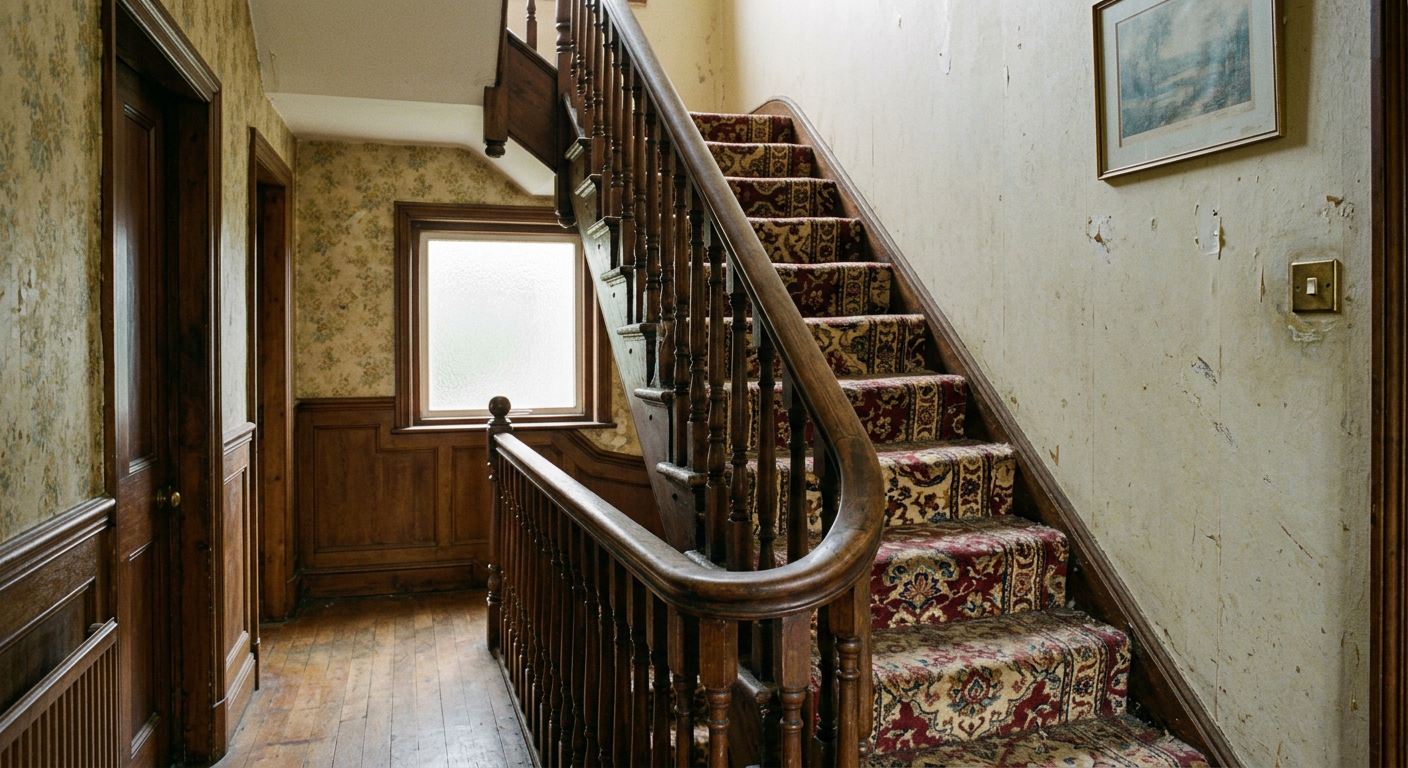
In the realm of residential architecture, few elements command as much visual and functional authority as the staircase. Often centrally located, it dictates the kinetic movement and visual flow between the public and private zones of a residence. A dated staircase—characterized by heavy, ornate wooden balusters, carpeted treads, and enclosed risers—acts as a visual barrier. It absorbs light, shrinks the perceived volume of a room, and firmly dates the interior design.
Modernizing this vital artery is not merely a cosmetic update; it is an architectural intervention. By updating railings to sleek metal or glass, refining treads to premium hardwoods, and eliminating unnecessary visual weight, you transform a utilitarian object into a sculptural masterpiece. At ai-architectures.com, we empower homeowners and designers to explore these structural metamorphoses through advanced AI visualization, ensuring that every design choice harmonizes with the home's broader architectural narrative.
Deconstructing the Modernization Process
1. Rethinking the Balustrade and Railings
The balustrade is the most visible component of your staircase. Transitioning from turned wooden spindles to contemporary materials instantly modernizes the space. Frameless glass panels offer uncompromised light permeability, making spaces feel expansive and interconnected. Alternatively, slim-profile steel or powder-coated aluminum balusters—whether arranged horizontally or vertically—inject an industrial yet refined aesthetic. The handrail itself, when crafted from minimalist geometric timber or sleek metal, provides a continuous, fluid line that draws the eye upward.
2. Elevating Treads and Risers
The surface upon which you step holds profound tactile and visual weight. Replacing carpeted or worn pine steps with solid hardwoods—such as white oak, walnut, or ash—introduces organic warmth. A prevailing trend in contemporary architecture is the "floating tread" design. By utilizing hidden steel stringers or open risers, the staircase achieves a gravity-defying lightness. When closed risers are necessary for structural or safety reasons, contrasting materials (e.g., natural wood treads against crisp white or matte black risers) create a striking rhythmic pattern.
3. Illuminating the Ascent: Integrated Lighting
Modern staircase design treats lighting not as an afterthought, but as an integral architectural component. Integrating linear LED strip lighting beneath the nosing of each tread, or embedding low-level wall-washing fixtures adjacent to the steps, serves a dual purpose. Functionally, it provides essential wayfinding at night. Aesthetically, it washes the materiality of the treads in warm light, accentuating wood grains and casting dramatic architectural shadows that elevate the entire structure.
Why Use AI for Staircase Visualization?
Visualizing structural changes to the core of your home can be daunting. Traditional rendering takes days and limits iteration. With the specialized architectural models developed by ai-architectures.com, the visualization paradigm shifts entirely.
- Instant Iteration: Test a minimalist glass balustrade against a blackened steel wireframe in seconds.
- Spatial Accuracy: Our AI understands depth, lighting, and architectural context, ensuring realistic shadows and reflections.
- Material Exploration: See exactly how matte finishes, high-gloss metals, and varied timber grains interact with your home's natural light.
- Risk Mitigation: Ensure absolute confidence in your multi-thousand-dollar renovation before a single piece of wood is cut.
Our AI doesn't just overlay textures; it comprehends the three-dimensional geometry of your existing space, producing highly accurate, photorealistic concepts that serve as the perfect blueprint for your contractors and architects.
Popular Aesthetic Directions for Staircase Renovation
Scandinavian Minimalism
Characterized by light-toned woods like ash or bleached oak, paired with frameless structural glass and white-painted stringers. This style maximizes light and promotes a serene, uncluttered atmosphere.
Industrial Modern
Exposed I-beam stringers, distressed or reclaimed timber treads, and raw or matte-black steel cabling. Perfect for lofts or homes looking to add a bold, textural contrast to soft interiors.
Contemporary Luxury
Rich, dark walnut treads, brass or brushed gold handrail accents, and integrated smart-lighting systems. This design speaks to opulence while maintaining a clean, modern silhouette.
Transitional Elegance
A bridge between classic and modern. Think painted box-newel posts paired with sleek iron spindles and polished oak treads, retaining warmth while significantly updating the geometric profile.
Ready to Rebuild Your Home's Spine?
Scroll up to our interactive widget, input your specific material preferences, and let the ai-architectures.com engine instantly generate the future of your interior architecture. The perfect staircase awaits.